This observation shows an impressive chain of pits along the southernmost tip of the chain in Artynia Catena, located on the northwestern flank of the volcano, Alba Patera.
These pits form in fracture along its southern most extent. The fracture is part of a larger fracture system that is radial to the volcano and suggests that it is related to the formation of the volcano. Therefore, this chain of pits may have formed from the withdrawal of subsurface magma and subsequent partial collapse of the overlying material into the fracture.
Another explanation may be that subsurface water/ice may have preferentially formed along these fractures and subsequent removal of ice-rich material by sublimation resulted in partial collapse of surface materials forming the pit chain.
Photo credit: NASA/JPL/University of Arizona

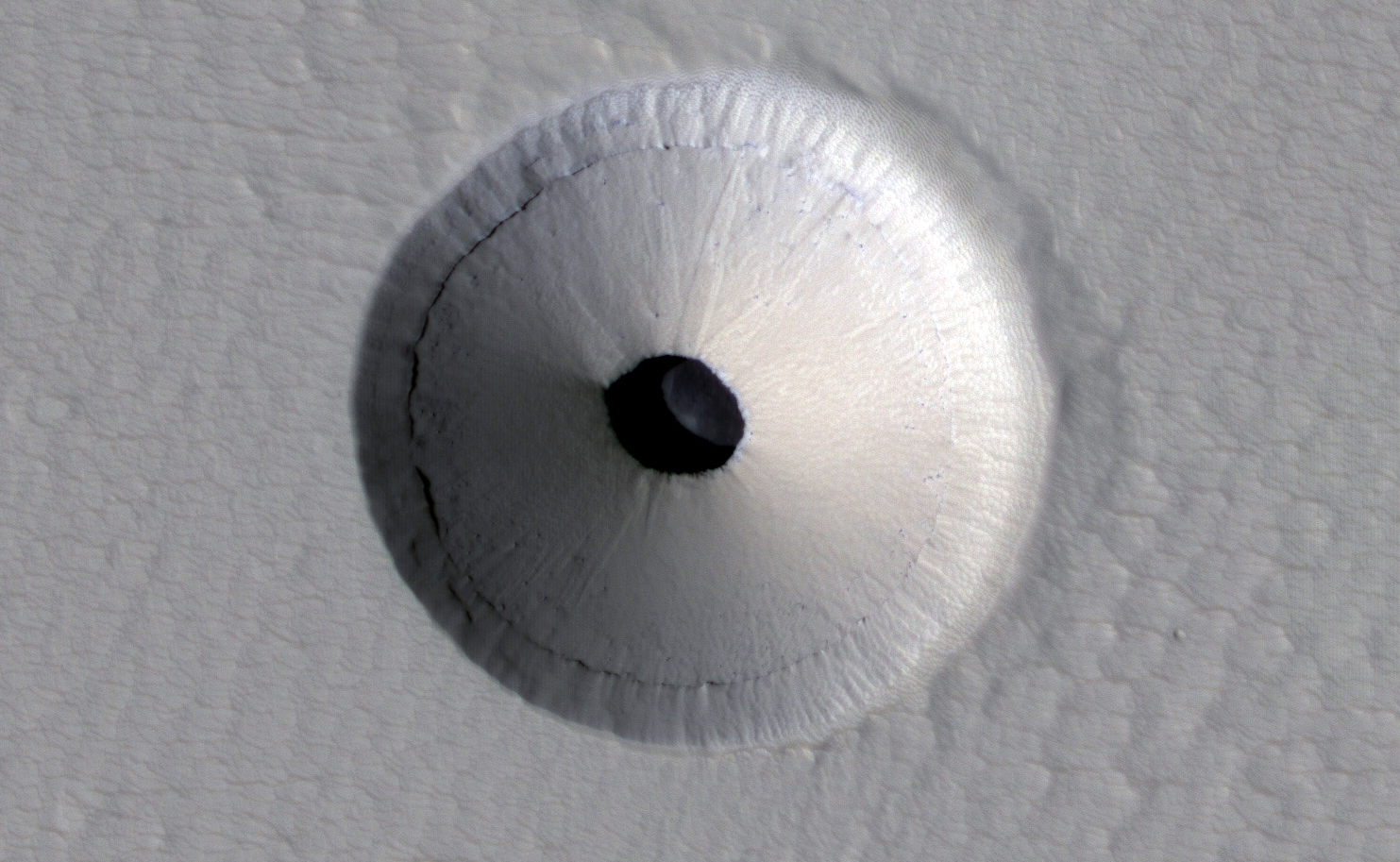
Earlier this year, the CTX camera team saw a crater containing a dark spot on the dusty slopes of the Pavonis Mons volcano. We took a closer look at this feature with HiRISE and found this unusual geologic feature.
The dark spot turned out to be a "skylight," an opening to an underground cavern, that is 35 meters (115 feet) across. Caves often form in volcanic regions like this when lava flows solidify on top, but keep flowing underneath their solid crust. These, now underground, rivers of lava can then drain away leaving the tube they flowed through empty. We can use the shadow cast on the floor of the pit to calculate that it is about 20 meters (65 feet) deep.
The origin of the larger hole that this pit is within is still obscure. You can see areas where material on the walls has slid into the pit. How much of the missing material has disappeared via the pit into the underground cavern?
Later this year, HiRISE will acquire a second image to create a stereo pair. Seeing this feature in stereo will help us unravel the mystery of its formation.
Photo credit: NASA/JPL/University of Arizona