Showing posts with label Interior Layered Deposits. Show all posts

Thursday, October 16, 2014

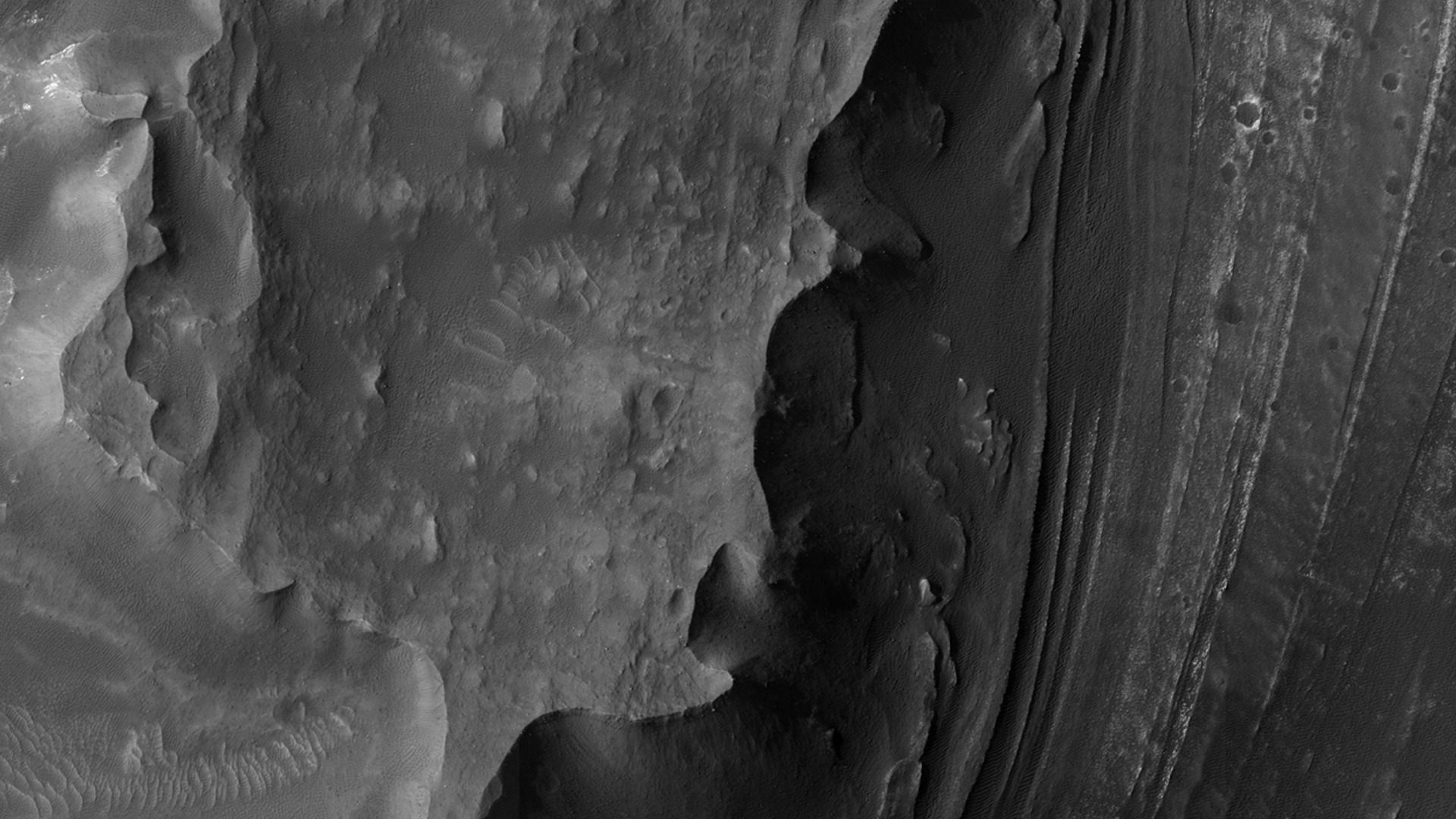
Mounds of Layered Material on the West Edge of Melas Chasma


Melas Chasma is the widest segment of the Valles Marineris canyon, and is an area where MRO has detected the presence of sulfates.

This image offers a view of an excellent contact between layered deposits that postdate the formation of Valles Marineris and possible deposits that predate the canyon's formation. The materials are near interior layered deposits that contain sulfates and likely have hydrated minerals. At high resolution, we can have more accurate mapping of the stratigraphic relationships and contacts. Enhanced color can help to differentiate between geologic units and for mapping of sulfates.

Image credit: NASA/JPL/University of Arizona

Note: For more information, see PIA18830: Mounds of Layered Material on the West Edge of Melas Chasma.

Saturday, November 16, 2013

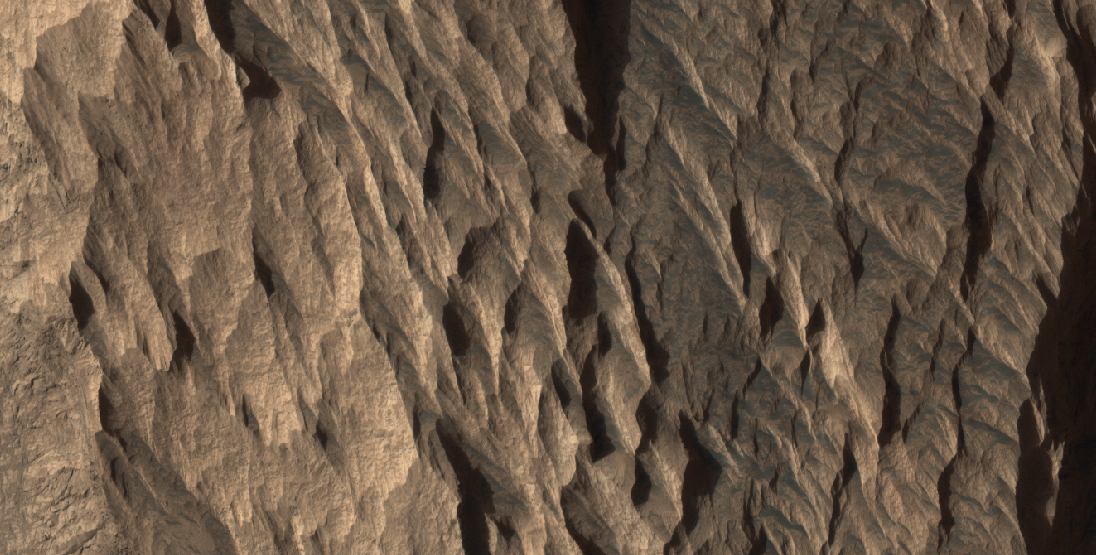
Sandstone Cliffs and Hematite Lag Deposits in Ophir Mensa


This target was one of the first close HiRISE views of the enigmatic Valles Marineris interior layered deposits. These light-toned sedimentary deposits are of interest to scientists because they are partially composed of minerals like hematite that likely formed in the presence of liquid water.

The lighter-tone linear units to the north are called "yardangs" and formed when downslope winds carved the fragile sandstone into channels. Over time, wind and gravity conspire to erode material downslope and onto the canyon floor. The darker-toned sandy deposits at the cliff base contain high concentrations of hematite (along with basaltic or volcanic sand) known from infrared orbital measurements.

HiRISE resolution can clearly show outcrops mass wasting finer materials out, and darker layers that are likely hematite-bearing units. This is an excellent candidate for what's called a "hematite lag deposit," where more resistant iron-rich hematite concretions have weathered out of the brittle mesa driven by gravity and wind, similar to that observed at the Mars Exploration Rover Opportunity landing site.

Photo credit: NASA/JPL/University of Arizona

Note: For more information, see PIA17691: Sandstone Cliffs and Hematite Lag Deposits of Ophir Mensa.

Tuesday, October 5, 2010

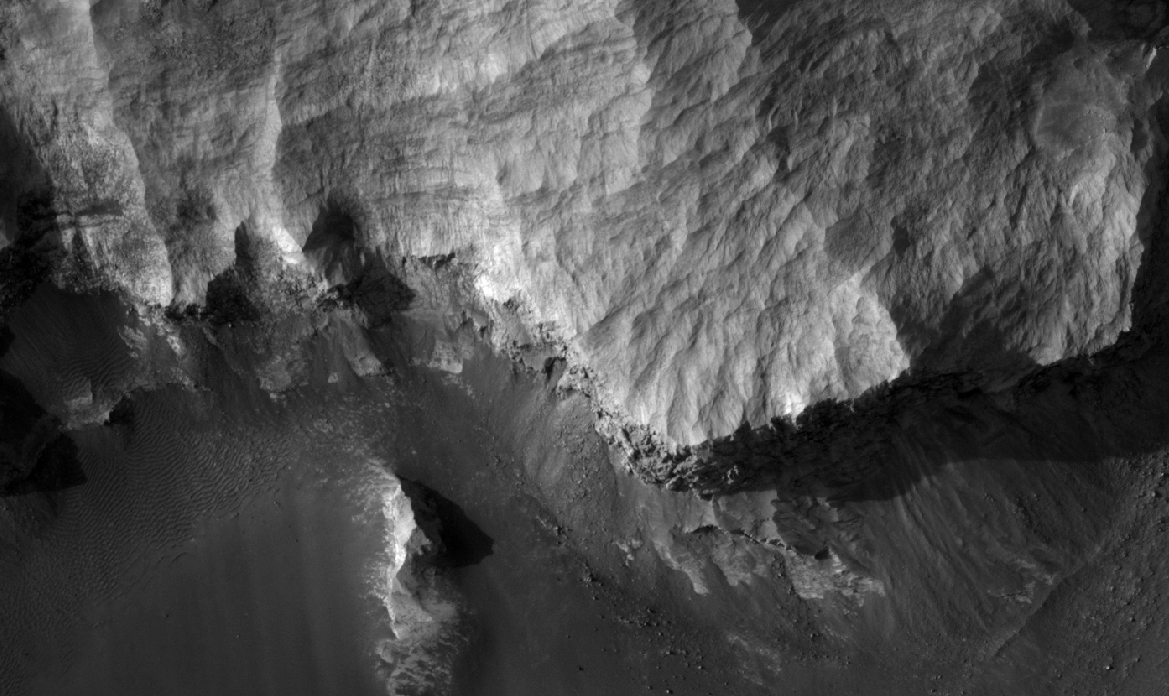
Very Fine Layers in Juventae Chasma


This image shows a portion of the light-toned layered deposits in Juventae Chasma.

Juventae Chasma is a large trough just north of the main part of Valles Marineris, and may have been the source region for giant floods long ago. There are currently several large hills of layered rock on the chasma floor, likely remnants of a deposit which was once more extensive. Among the possible origins of the layered deposits are lake sediments, volcanic material of various origins (possibly erupted under ice), or deposits of aeolian sand and dust.

The subimage shows some extremely thin beds within one of the mounds. These are probably sheets of material lying nearly flat, and are some of the finest-scale layers observed on Mars. It is possible that in places layer boundaries are accentuated by variable amounts of dark wind-blown dust, which buries the layers in some parts of the image; nevertheless, some of the layering must be extremely thin.

The layers are actually even more thin than they appear, since the slope of the mound makes them appear wider. The occurrence of many thin layers indicates many events or variations in deposition while this material was forming.

Photo credit: NASA/JPL/University of Arizona

Friday, July 16, 2010

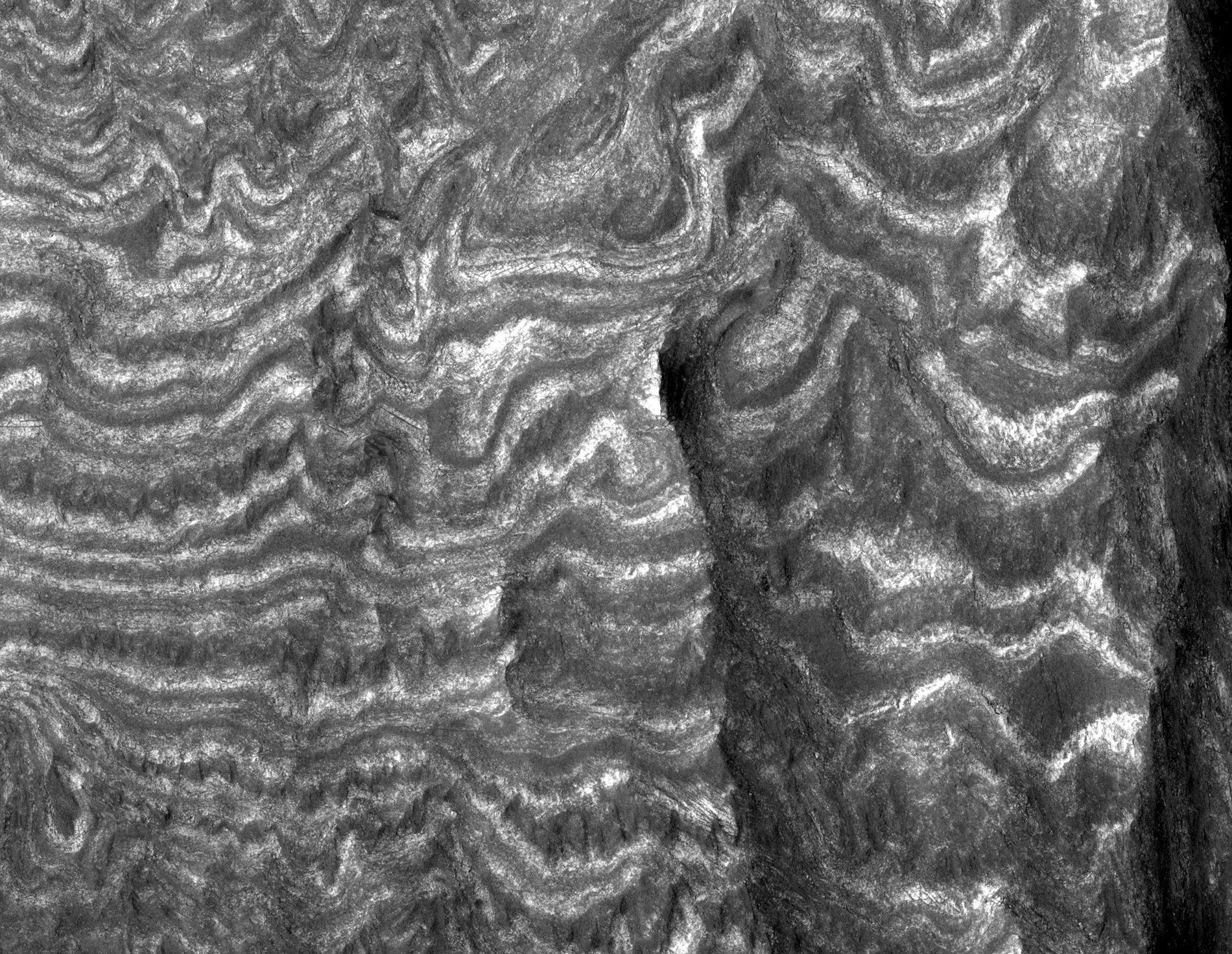
Interior Layered Deposits in Juventae Chasma


This observation shows a portion of interior layered deposits (ILD) in Juventae Chasma.

Juventae Chasma is a large depression near the equatorial canyon system Valles Marineris. The scene is along the top of a mound of layered deposits on the floor of Juventae Chasma. Dunes are seen in the low-lying, darker regions. Very fine layers are also visible. Understanding what kinds of materials formed the layers, how they were set in place, and how they have evolved will provide insight into Martian geologic history.

Many of the Martian chasmata (plural of chasma) contain ILD like these. The ILD were deposited a long time ago, but the actual method is unknown. It has been suggested that sedimentary layers in standing bodies of water or volcanic ash deposits comprise the ILD. The alternating layers could indicate regular, repeating cycles of deposition. It is possible that these layers once covered the entire chasma floor.

The IDL shown here have been modified by wind erosion. The yardangs visible near the top right of the full image are evidence for wind sculpting of the deposits. It is interesting to note that there are very few craters in this scene, especially in the areas with visible layers. One crater can be found about half-way down the left side of the image amidst layers, and several craters are seen in the dark material on the right side of the image. This suggests that the ILD are eroding here fast enough to erase small craters before large numbers of them can accumulate.

Photo credit: NASA/JPL/University of Arizona