Showing posts with label Scandia Colles. Show all posts

Sunday, August 25, 2013

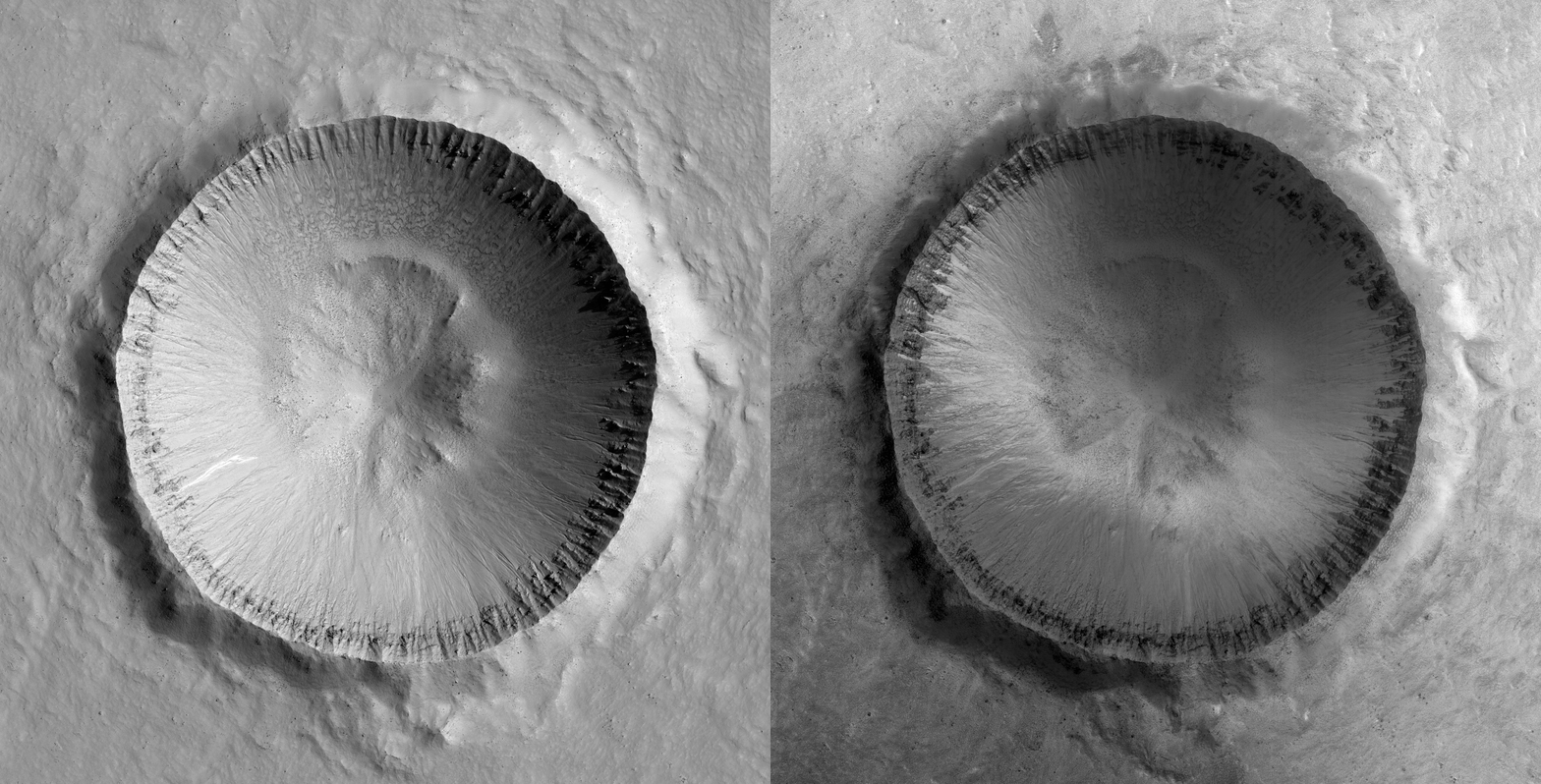
Frosted Impact Crater in Scandia Colles


This image was planned to search for gully activity in the Northern Hemisphere. Changing gullies have so far been documented only in the Southern Hemisphere, where a greater thickness of carbon dioxide frost forms in the winter.

The gullies are active when this frost is present, especially in the late winter and spring as it sublimates. The well-preserved crater here has a bright gully deposit (visible in prior images acquired in late northern summer), which suggests recent activity. An animated GIF blinking between these two images (at reduced resolution) shows how it changes in appearance with the seasons.

Photo credit: NASA/JPL/University of Arizona

Note: This crater is located in the Scandia Colles region of Vastitas Boreales.

Tuesday, March 23, 2010

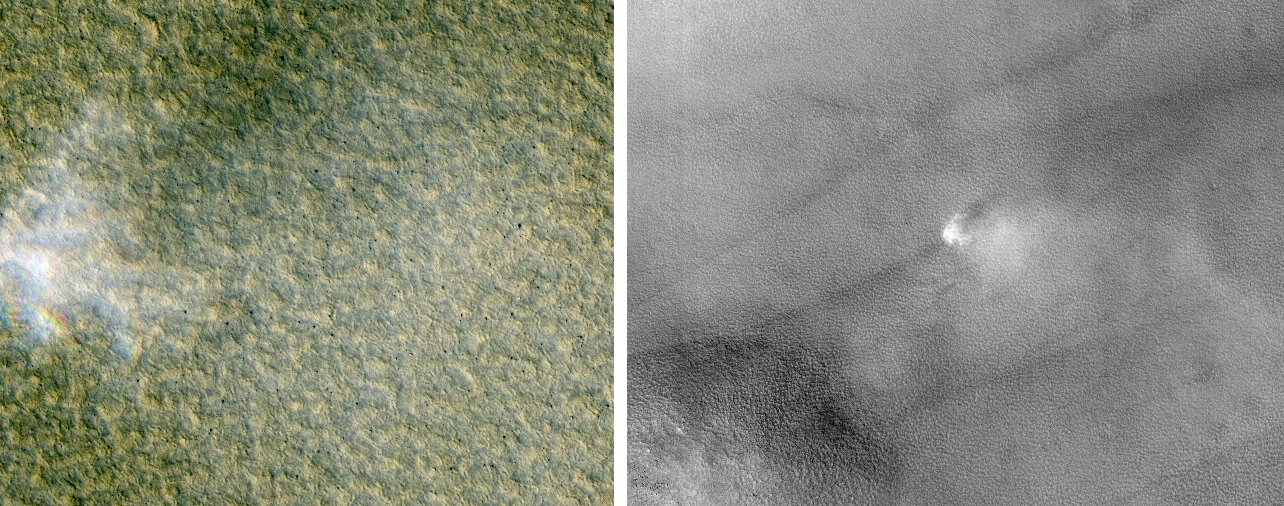
Record-Breaking Dust Devil Caught in the Act


Sometimes HiRISE finds something unexpected.

This image was targeted to study knobs in Mars' northern plains, just north of Scandia Crater. The knobs are clearly imaged, but what surprised scientists was a dust devil visible in the south-central part of the image.

As on Earth, dust devils form when ground heated by sunlight warms the air above it. The hot air rises, forming an updraft accompanied by vortical motions. Because warm ground is a requirement, dust devils on Mars generally form in late spring to summer, especially at high latitudes.

This image was taken in early spring (2010), at a latitude of 61 degrees North. No dust devil has been seen this far from the equator at such an early season before.

Photo credit: NASA/JPL/University of Arizona

Note: The location of this dust devil and Scandia Crater are both in the Scandia Colles region of the Vastitas Borealis, and is located in the Diacria Quadrangle. Scandia Crater is located almost due north of Milankovic Crater, which is the most prominent crater in that region.