Today's VIS image shows the multitude of layers making up the South Polar cap.
Orbit Number: 48506 Latitude: -85.8144 Longitude: 95.4964 Instrument: VIS Captured: 2012-11-20 01:53
Photo credit: NASA/JPL/Arizona State University
Today's VIS image shows the multitude of layers making up the South Polar cap.
Orbit Number: 48506 Latitude: -85.8144 Longitude: 95.4964 Instrument: VIS Captured: 2012-11-20 01:53

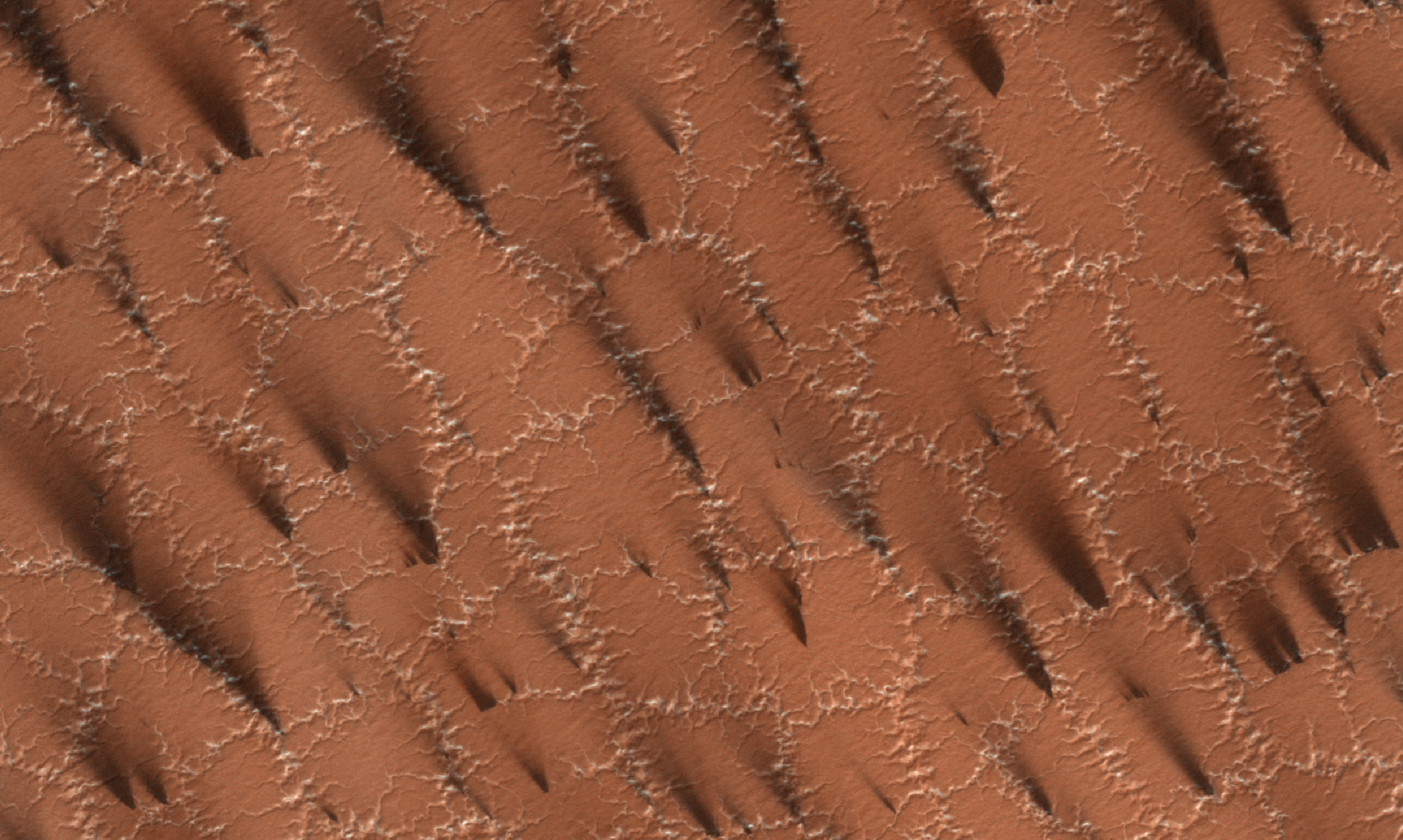
Bright carbon dioxide frost (or, dry ice) highlights this network of channels carved into the surface. The channels are eroded a little bit every spring when the seasonal polar cap, composed of dry ice, sublimates (meaning going directly from a solid to gas) at the ice-surface interface. The erosion occurs under the seasonal ice layer: when trapped pressurized gas finds an escape route it carries along loose surface material. This surface material is blown downwind and deposited in dark fans on top of the seasonal ice layer.
The trapped gas finds the weakest easiest escape route. In this area the gas exploited the existing polygonal structure of the surface below. Polygonal terrain is common at high latitudes, and is caused by the thermal contraction and expansion of water ice frozen in the surface dirt.

The south polar cap of Mars is comprised of alternating layers of ice and dust. The darker dust layers help show the layering, especially on steep slopes.

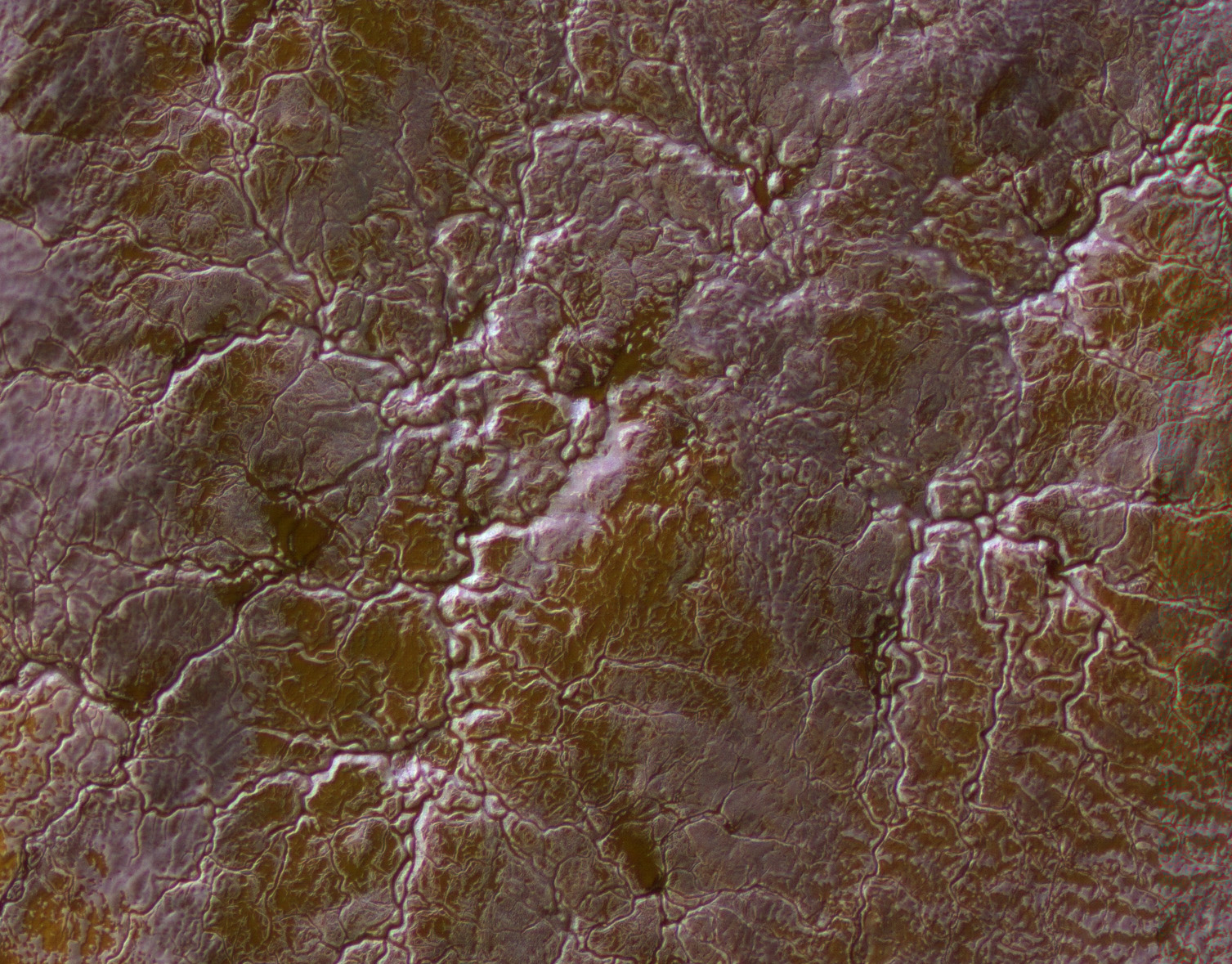
Mars has a seasonal southern polar cap composed of carbon dioxide (commonly known as dry ice), that overlies a permanent polar cap which is a mixture of carbon dioxide ice, water ice and dust. As the carbon dioxide evaporates in the spring the escaping gas carves channels in the permanent cap below. Often these channels radiate outward (or converge inward), giving them a spider-like appearance [araneiform].
In this false color image the seasonal frost is whitish-lavender. The tan areas starting to show through are where the frost has already evaporated (sublimated is actually the correct term, when ice changes directly to a gas). Tan-colored dust blows around and accumulates in the bottom of some of the channels.
This is truly other-worldly terrain, with exotic landforms with no earthly analogs.