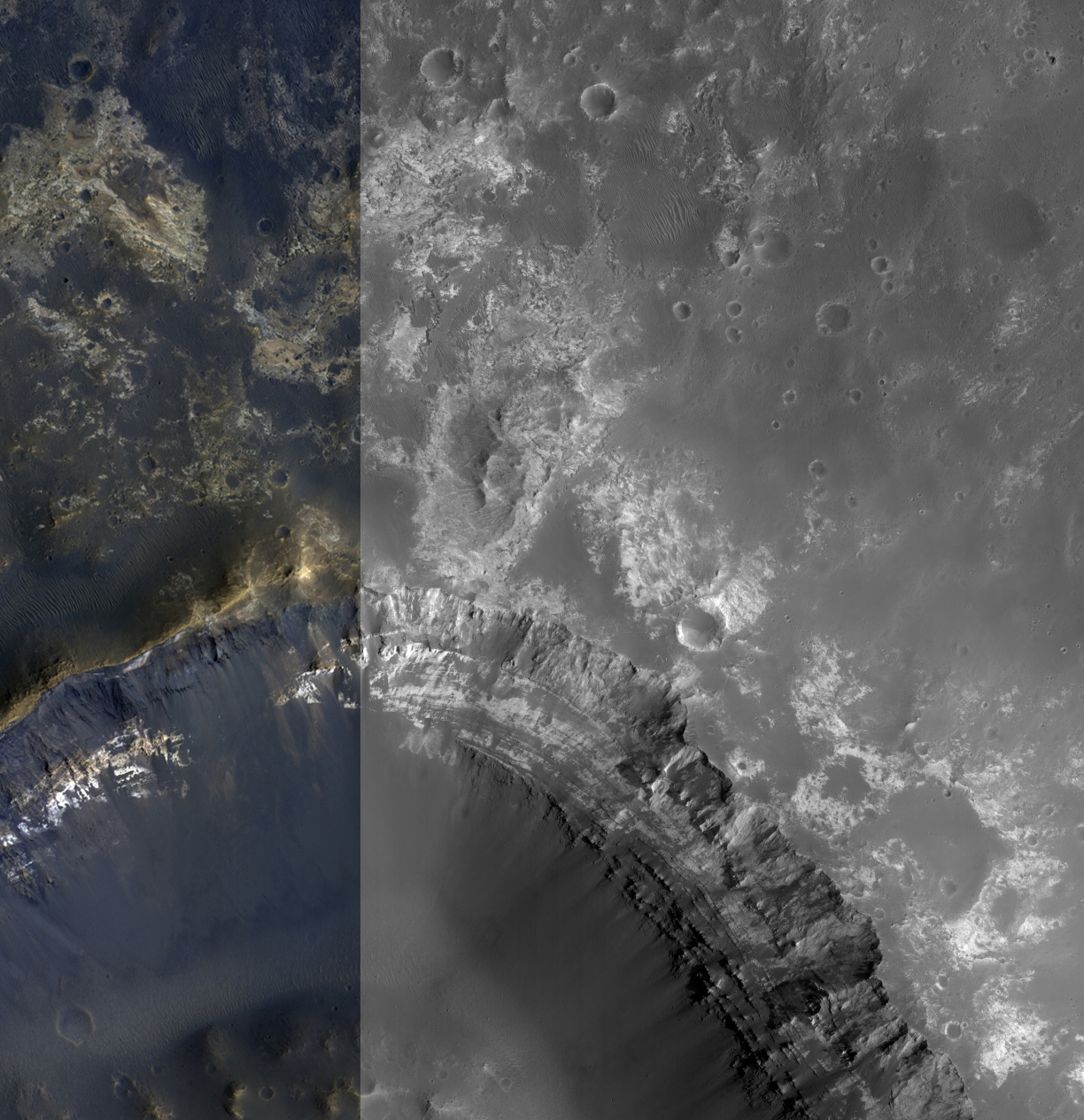
Who wants color? My [the author's] preferred HiRISE color product uses all three color bands (i.e, wavelengths) that HiRISE can image -- IRB, which refers to Infrared-Red-Blue/Green. Ever heard of R-G-B (Red-Blue-Green)? These three primary colors essentially combine to make all the perceived colors that we know of.
By substituting a wavelength that is normally invisible to the human eye for one that is, like infrared for red, we are able to create a "false"-color image. The infrared is useful because its sensitive to iron-bearing minerals and their oxidation state (degree of "rusting"). Ferrous iron, the more oxidized variety, is what makes Mars so reddish. Basically, most of the materials on Mars are pretty oxidized/rusted, and therefore altered from the more original ferric iron state (the less oxidized iron common to volcanic minerals such as olivine and pyroxene). So in general, the bluer the materials in our IRB images the less oxidized (altered) and the redder or yellower the materials, the more oxidized, or altered.
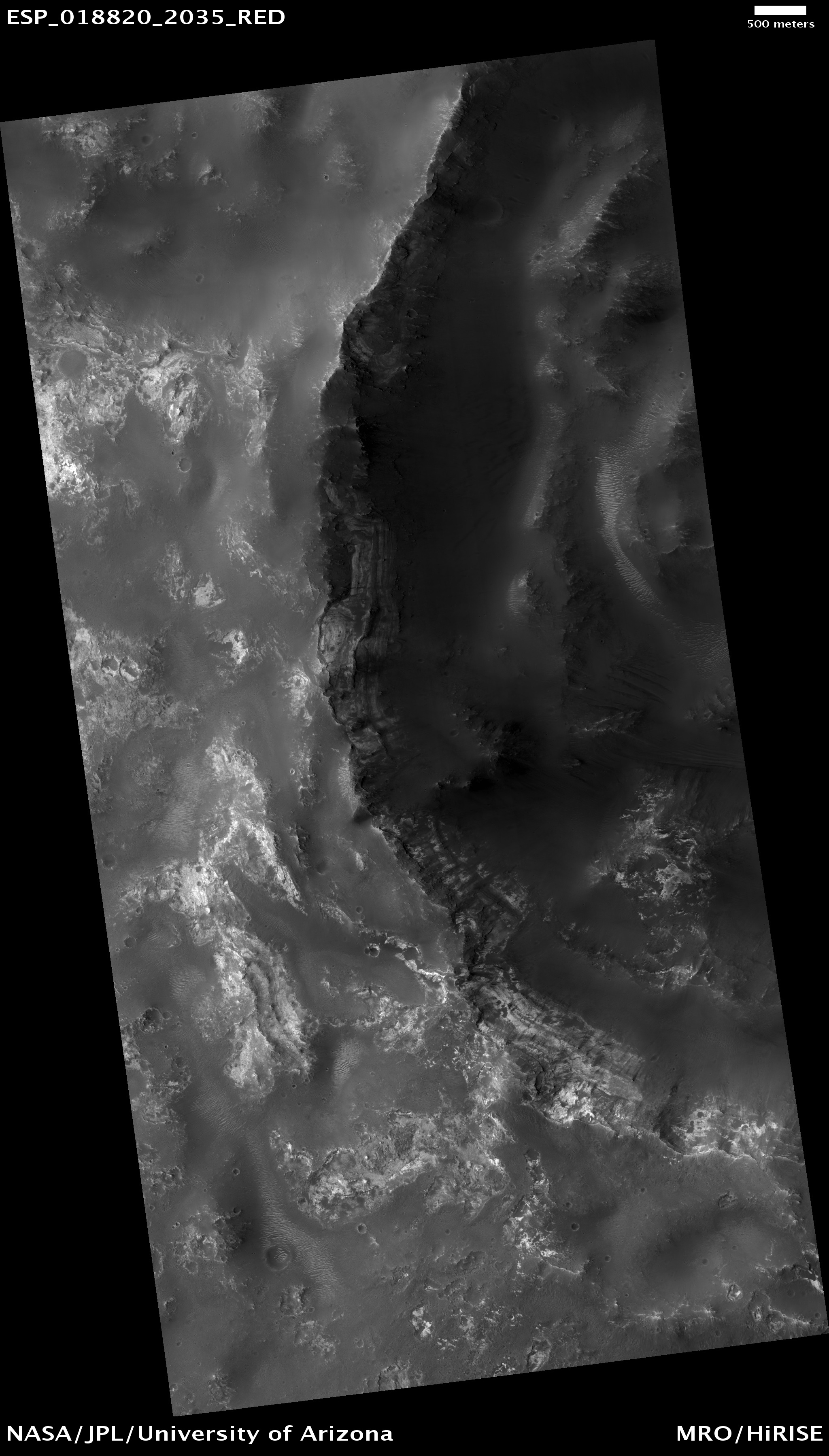
The gorgeous, degraded, but well-preserved crater in this image has likely been sandblasted to reveal some of its exquisite bedrock exposures within the crater wall and sporadically on its ejecta blanket. This HiRISE acquisition is a particularly nice image because this an approximately 4 to 5 kilometer diameter crater almost fits perfectly in our 5 to 6 kilometer image swath (width; fixed by our camera's characteristics and the orbit of MRO).
This crater also exposes some exquisite bedrock layers from beneath the Martian cratered plains. Given the context of the geographic location of this crater, the light-toned layers exposed by the craters are likely clay-rich materials for which the Mawrth Vallis region on Mars is well known for.
Photo credit: NASA/JPL/University of Arizona