Showing posts with label Hydrothermal Activity. Show all posts

Friday, July 19, 2013

Layered Deposits North of Hellas Planitia


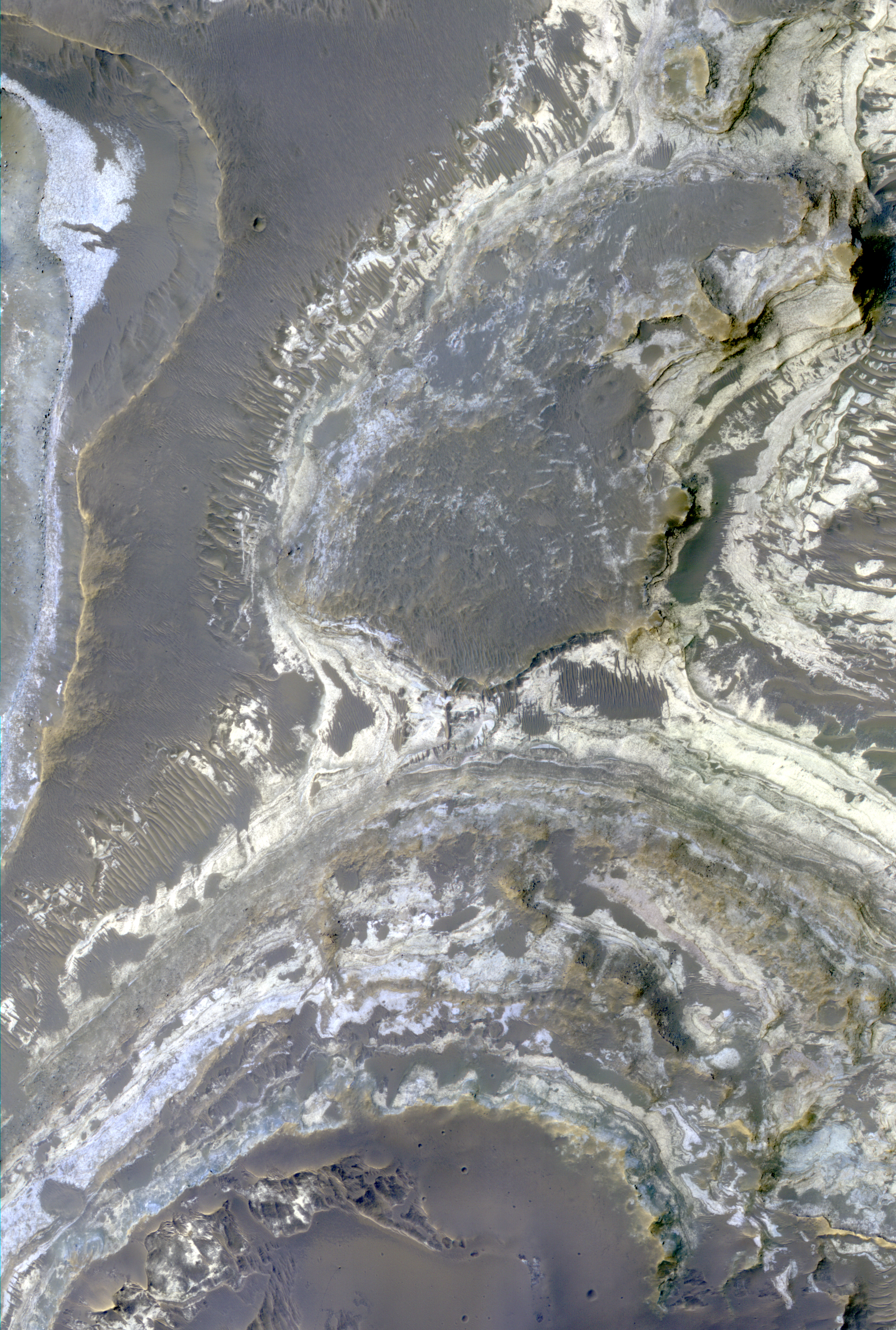
Excellent exposures of light-toned layered deposits occur along the northern edge of Hellas Basin, like those visible in this enhanced color image.

Some of these layered sediments have hydration features in CRISM data, and the various colors visible in this image suggests several different compositions may be present throughout the strata. The sediments may have been emplaced by hydrothermal activity associated with the impact event that created Hellas Basin.

Alternatively, they could be younger deposits that formed within this region when a lake existed here. Studies of the deposits using several data sets could distinguish between these two origins and may result in additional hypotheses for their formation.

This is a stereo pair with ESP_032425_1525.

Photo credit: NASA/JPL/University of Arizona

Monday, March 26, 2012

Mineral Veins in Terra Sabaea


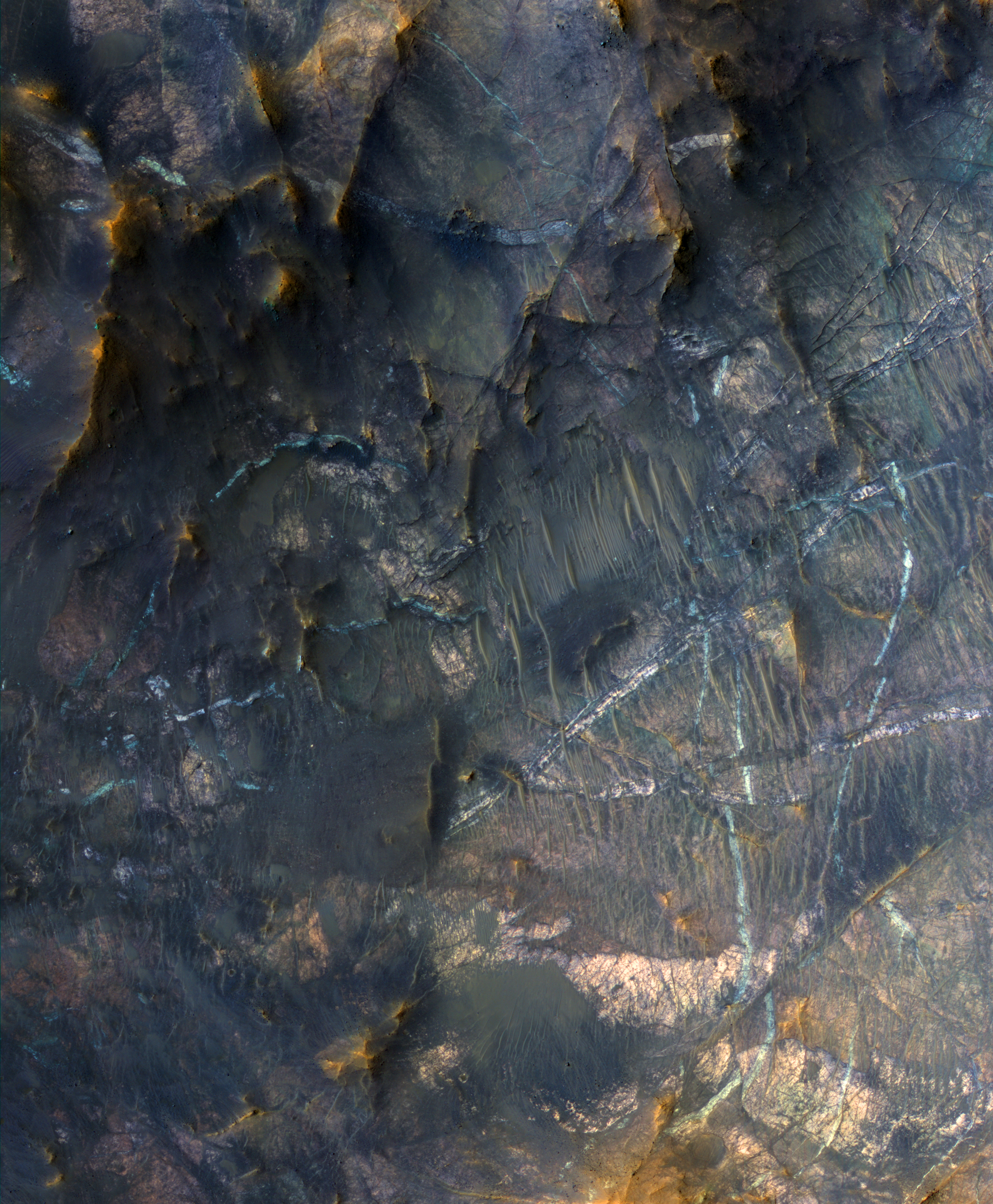
The bright linear features cutting the bedrock in the center region of this image look like mineral veins.

Mineral veins are sheetlike bodies of minerals formed by water that flows through fractures. The setting of this image is the central uplift of a large (approximately 50-kilometer diameter) impact crater, where deep, ancient bedrock was uplifted about 5 kilometers and fractured. Heat from the impact melted ice in the Martian crust, creating a hydrothermal system. This could have been a habitable environment.

A small mineral vein was recently discovered by the Opportunity rover at Endeavour Crater.

This is a stereo pair with ESP_025766_2005.

Photo credit: NASA/JPL/University of Arizona

Note: This crater is located in northeast Terra Sabaea, in a complex of craters southeast of Baldet Crater.

Sunday, February 5, 2012

The Floor of Toro Crater


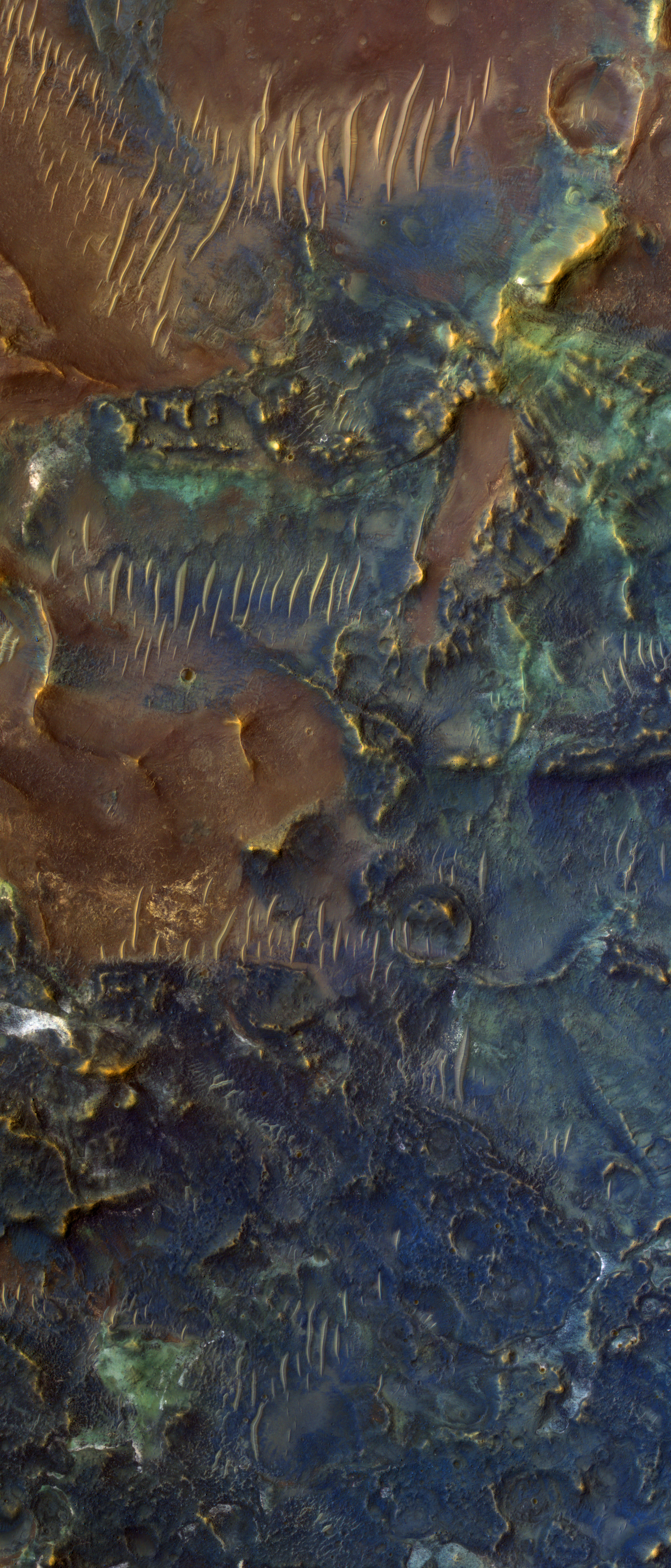
Toro Crater may have experienced hydrothermal alteration, producing diverse minerals. The mineral diversity leads to diverse color in HiRISE, especially when enhanced as in this subimage.

In general the blue and green colors indicate unaltered minerals like pyroxene and olivine, whereas the warmer colors indicate alteration into clays and other minerals. The linear north-south trending features are windblown dunes that are much younger than the bedrock.

This is a stereo pair with ESP_025344_1970.

Photo credit: NASA/JPL/University of Arizona

Tuesday, August 9, 2011

Slope of Gale Crater above MSL Landing Site


This image covers materials near Gale Crater just north of the planned Mars Science Laboratory landing site.

It is possible that hydrothermal deposits formed here in association with the creation and cooling of Gale Crater billions of years ago. This material could then have been transported into the landing ellipse by fluvial processes. Hydrothermal deposits may represent evidence for an ancient habitable environment on Mars.

Photo credit: NASA/JPL/University of Arizona

Sunday, November 14, 2010

Crater Central Peak


This observation shows a central peak of a large, degraded impact crater in the Terra Sirenum region of the southern hemisphere. Central peaks form during crater formation when a particularly large impactor hits the surface.

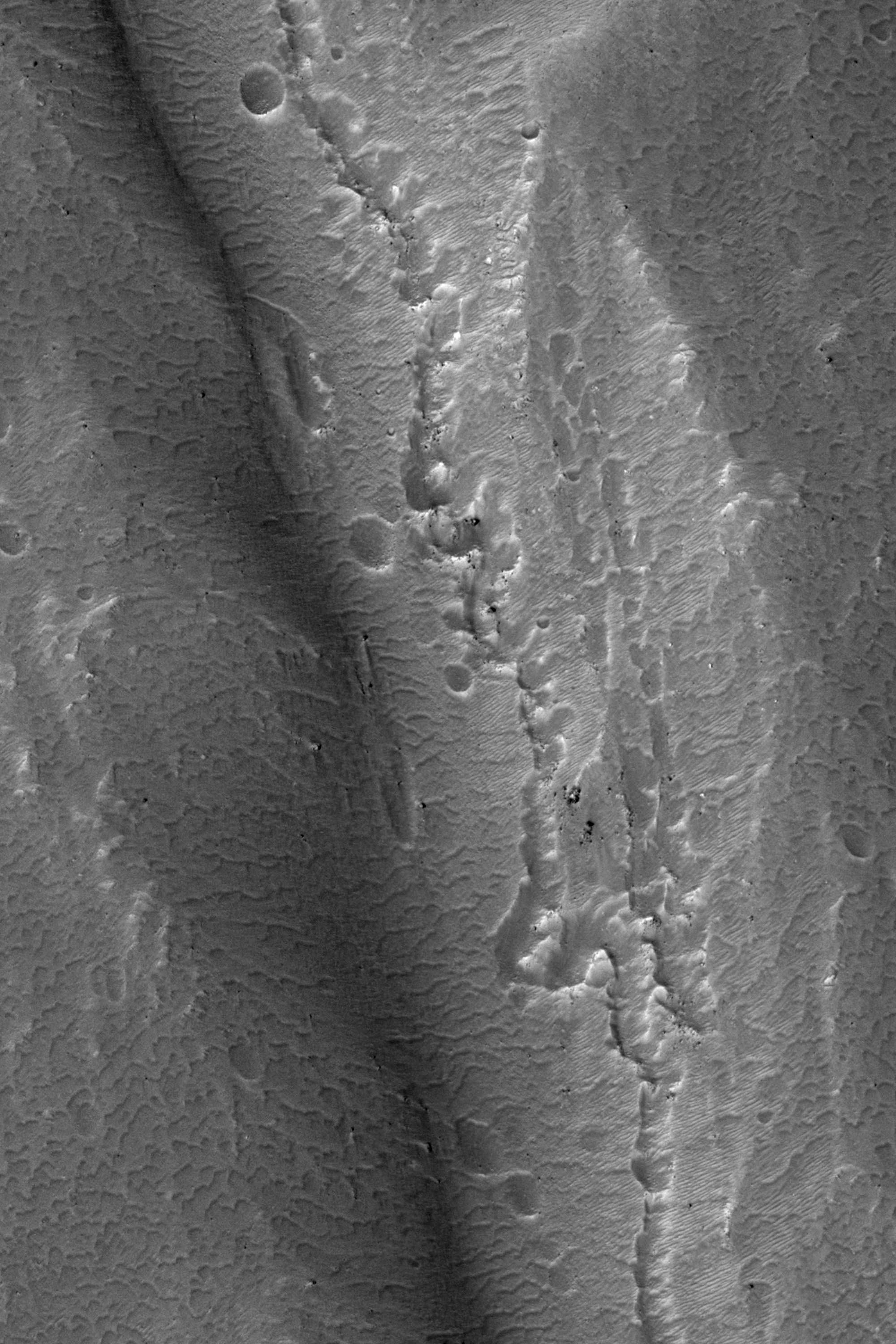
The central peak visible here (about 2/3 of the way down the full image) is interesting because it has some fluvial-like features on its south side. At lower resolution, these features appear to be channels with some connecting pits. At higher resolution (see subimage), the features appear to be troughs that are filled with dunes.

What is most interesting is the chain of pits that extends down the center of some of the troughs as seen in the subimage. It is possible that these pits are evidence of subsurface piping or hydrothermal activity. Piping occurs when subsurface water flows through soil, takes some soil with it, and causes the overlying ground to collapse. These fluvial-like features and the connected pits may have formed during a late stage of crater formation when temperatures were suitable for liquid water.

Photo credit: NASA/JPL/University of Arizona